Permit to Work: Why Complex Work Does Not Require Difficult Text
What Separates a Good Permit to Work from a Poor One? (full article)
By Terje Lovoy terje@lovoy.ca
This article continues an ongoing discussion about how failures in Permits to Work (PTW) and Safety Management Systems (SMS) in marine shipping companies contribute to repeated accidents during high-risk work. In practice, this includes work such as confined space entry, where failures still cost lives. The article examines how poor usability, complex structure, and unclear text in permits to work undermine safe work and contribute to repeated accidents.
Why a Permit to Work Often Becomes Too Difficult and Leads to Accidents
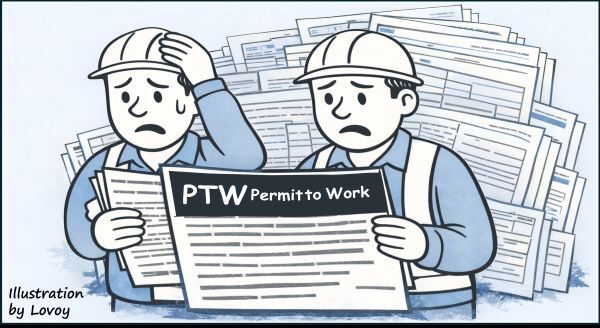
Permits to work often become difficult to use because people assume safety and regulations demand it. They say complex work forces difficult explanations. We hear this argument often. This argument sounds reasonable at first. But it mixes two very different ideas. It mixes complexity and difficulty. That mix-up causes many poor permit to work procedures today.
How Experience in Aviation and Shipping Changed My View on Procedures
Procedure writing has been part of my work for more than 40 years, first in shipping and diving, later in aviation, and eventually back in shipping again. In the first part of my career, I tried to learn as much as possible about complex industries. Later, I realized that understanding complexity was only half the task. The other half was learning how to explain it without making the work harder to do. I learned this the hard way. Many procedures I helped write were rarely used. Accidents and close calls showed that difficult explanations do not support safety.
Today, I no longer write procedures for companies. I believe procedures should be written by companies themselves, using their own people. My role now is to help companies learn how to structure their SMSs and how to write procedures people can use.
I do not see this article as a finished journey. If anything, we are still at an early stage. I am still learning, and I share my experiences in the hope of getting your feedback and learning more.
Terminology Used in this Article
In this article, we use the term Permit to Work (PTW) throughout. In the industry, people also use permit to work system, control of work, and system of safe work for the same practice. Companies usually integrate the permits to work into the Safety Management System (SMS) as a formal control for high-risk work.
Complex Ship Operations and the Risks a Permit to Work Must Control
Permit to work and safety management systems exist because operating vessels in marine shipping is complex and always will be.
Safety management systems and permits to work address serious hazards, including:
- Lack of oxygen
- Toxic gases and chemicals
- Fire and explosion
- Extreme temperatures
- Work at height
- Stored energy
Each risk is non-linear and can change on its own. Their combined effect is hard to predict and therefore complex. But just because work is complex does not mean we must explain it in a difficult way. In fact, the more complex something is, the more important clear explanations become.

Complex ship operations combine many variables such as different hazards and personal protective equipment requirements.
Why Complex Work Does Not Require Difficult Permit to Work Text
Many permit to work forms feel difficult to use. The work itself is complex. That is unavoidable. But poor explanations are avoidable and make the text too difficult to understand.
People often say: There are many regulations, so the PTWs must be difficult. That claim about PTW difficulty does not hold. Difficulty enters when we explain complexity without breaking it into clear, structured parts. That is a design choice, not a legal requirement. Regulations rarely define how to explain it. But in most cases, difficult explanations reflect a lack of awareness by the SMS writer, not a deliberate choice.
Complex does not have to mean difficult. Poor permit to work usability increases the risk of accidents during real work.
The Wrong Question Dominates the Permit to Work Debate
Most debates about permits to work focus on the wrong question. They ask: “Do we need PTWs or not?” That question helps no one. PTWs already exist. They will not disappear.
The better question is this: What separates a poor PTW from a good one? Almost no one asks that.
Common Design Failures in a Poor Permit to Work
A poor permit to work often looks thorough. But it fails people during real work.
Poor PTWs usually:
- Spread across too many files and forms for each job
- Require excessive cross-referencing
- Do not follow a logical workflow
- Mix background and training information into operational forms
The PTW form becomes a training document. These PTW forms bury critical hazards among explanations. It is like trying to drink water from a fire hose. You cannot absorb everything. You lose control over what matters most. It leads to complacency — people rush, skim, and sign. Safety does not improve.
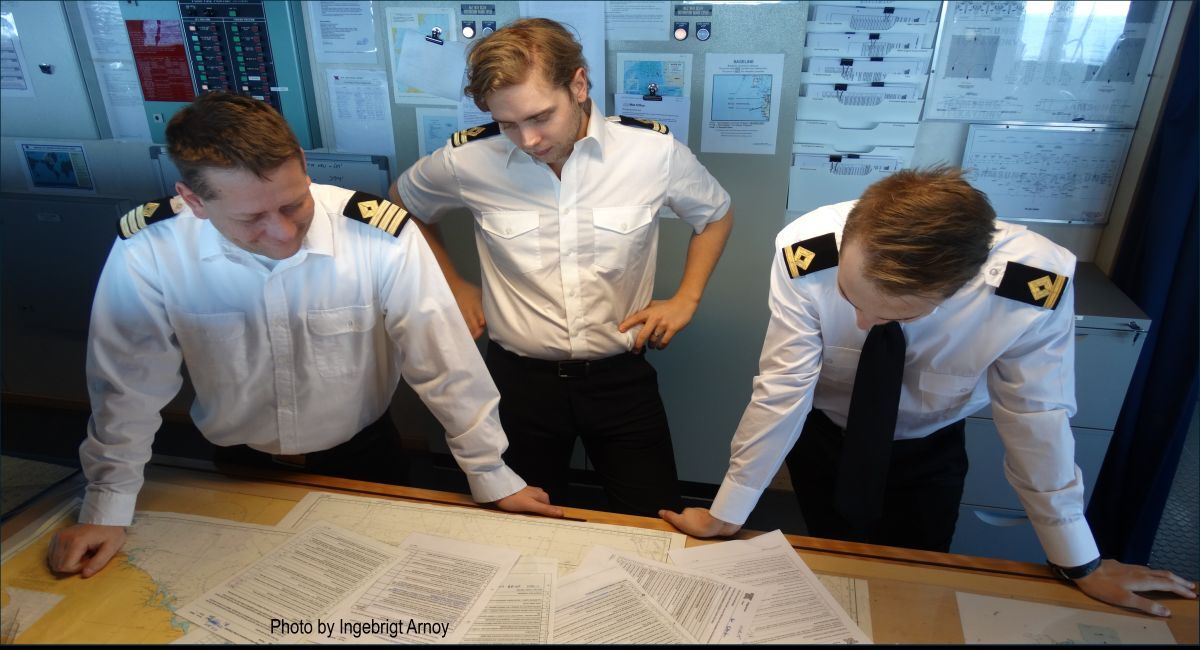
A poor permit to work spreads critical information across too many documents, forces constant cross-referencing, and pushes seafarers toward frustration and complacency.
Key Features of an Effective Permit to Work
A good permit to work takes a different design approach. It accepts that work is complex. But it does not accept unnecessary difficult explanations.
A good PTW:
- Is shorter, clearer and easier to use but with more detail (less becomes more)
- Uses plain, everyday language
- Follows the actual sequence of the work
- Aligns procedures, PTW forms, and checklists as one system
Procedures should describe the full task from start to finish. They include both critical hazards and necessary background explanations. PTW forms and checklists are operational tools. People use them during the job. They focus on the most critical hazards.
- We remove nothing
- We do not simplify anything away
- We place information where it supports safe action.
This case study shows how better permit to work design improves usability during real work: Excelerate Energy Simplifies SMS
Recurring Accidents Linked to Permit to Work Failures
Serious accidents linked to permit to work failures often repeat the same patterns. We already know this. But people still die from:
- Energy release
- Isolation failures
- Confined space entry
These events are not new. They return year after year in marine shipping. Written procedures in safety management systems alone do not make work safe. The problem is not missing permit to work information. The problem is missing focus.
Do We Still Need Written Procedures in Safety Management Systems?
Written procedures and permits to work in safety management systems alone do not make work safe. Some argue that safety comes from culture. They point to leadership, management, and working conditions. They are right about one thing. These factors matter a lot. Good leaders influence behavior. Good culture supports speaking up. Good management comes from the top with genuine care and good working conditions.
Many have pointed out, including Dr. Nippin Anand, that rules, forms, and processes by themselves do not prevent accidents. For further discussion on learning and why organizations often fail to learn from accidents, see the good work of Dr. Nippin Anand at Novellus Solutions:
https://novellus.solutions/insights/
It concludes that paperwork alone does not make work safe. That point about paperwork is valid. But some readers draw the wrong conclusion and argue for reducing or eliminating procedures and permits. They assume that strong culture alone can replace written procedures. That assumption does not hold.
Good culture should not replace written procedures. They can support each other. Written procedures can capture, store, and reinforce what good culture looks like in practice. They can preserve the company’s collective experience and hard-learned lessons over many years. Without that shared reference, learning and knowledge transfer becomes difficult.
What Is the Alternative to Written Procedures?
Those who argue against written procedures and permits to work rarely explain the alternative. If we do not write things down, what remains? Word-of-mouth? Personal habits, likes, and dislikes?
This way of sharing knowledge worked once. Elders shared knowledge around a bonfire. Stories carried lessons forward. Most will agree that modern ship operations are too complex to revert to a stone age word-of-mouth-only method.

Verbal communication matters and is essential. But modern ship operations are too complex to revert to a stone age, verbal-only transfer of knowledge.
You Cannot Make Procedures for Everything
Some argue that you cannot write procedures for every possible scenario. For some, that argument becomes an excuse to question the value of procedures at all. It suggests that procedures limit thinking and replace judgment. At first, it may sound reasonable. But most accidents happen during familiar work and routine tasks. Procedures reduce predictable errors. They free attention for judgment and improvisation. They allow crews to build on shared experience instead of starting from nothing each time.
You cannot make procedures for everything, but that is no reason to make procedures for nothing.
Why Permit to Work Writers Underestimate the Difficulty of Clarity
Most permits to work are written with good intentions. The problem is not effort or commitment. The real problem is awareness. When SMS writers hear about safety management system simplification, they often assume it is obvious and easy. They believe they already know how to do it. That belief about SMS writing is often a misconception. Writing text that people can quickly understand and use during work is hard. Simplicity does not happen by itself. It must be designed. And design requires a method.
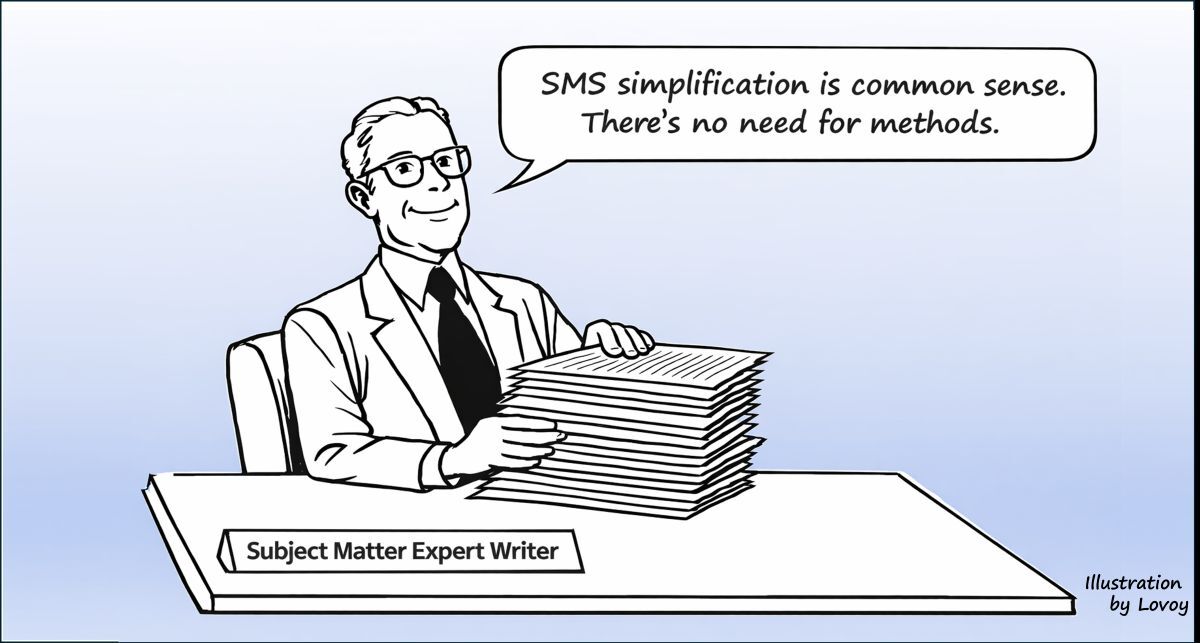
Many writers assume that the ability to write about complex topics automatically means they can write simple, usable SMS text.
In reality, many writers do not know how to write usable procedures. And more importantly, they do not know that they do not know. I made the same mistake. For a large part of my career, I assumed that understanding the work was enough. I assumed that if I explained it carefully, it would work. I assumed that the way I wrote was the best way. It was not. It took me more than half my life to become aware of this. Nothing improves without awareness. Habit change begins by recognizing what we do not know. I believe this lack of awareness is the root cause of many difficult-to-use SMSs and PTWs.
That same awareness about designing usable checklists appears clearly in the work of Dr. Atul Gawande. He is an exceptionally skilled author, as anyone who has read his book “The Checklist Manifesto” can see. Yet even he recognized that strong language skills were not enough. After what he describes as his “first miserable attempt” at writing the World Health Organization’s (WHO) new safe surgical checklist, he stopped relying on intuition. He realized that he did not know how to design risk-based checklists. So instead of trying harder, Dr. Gawande went to people who already knew how to do it. That led him to the Boeing factory in 2008.
Boeing is a world leader in designing user-friendly checklists. Before Dr. Gawande’s visit, I had worked at Boeing with training and implementation of their enhanced flight crew manuals and checklists.
WHO’s result of applying these principles to surgery was a 47 percent reduction in deaths, documented in The New England Journal of Medicine. Another article published in European Urology Focus describes similar effects.
The Cost of Improving Permit to Work and Safety Management System Design
Simplifying and improving permit to work and safety management system design raises a common question: “Can we afford this?” Simplifying SMSs takes time. That is true. But unclear SMSs cost more.
- They increase training effort
- They increase audit stress
- They increase operational friction
- They increase accident risk.
SMS simplification is a one-time effort. The benefits last for years. The better question is: Can we afford not to do it?
Improving Permits to Work Through Industry Collaboration
Improving permits to work requires industry collaboration. No single company solves these problems alone. Many companies face the same challenges with PTW design, usability, and consistency within their safety management systems. Sharing experience helps identify what works, what does not, and why, which helps reduce repeated accidents.
This article reflects my experience, not a final answer. I invite you to challenge assumptions, share examples, and add perspectives in the comments on LinkedIn, where we have published a shortened version of this article.
Earlier Articles in this Series
Should We Worry About too Complicated PTWs?
Are Permit to Work Systems Too Complicated?
Who Should Write Your Safety Management System (SMS)?
Improved perceived usability: Case study video
Article written by Terje Lovoy terje@lovoy.ca